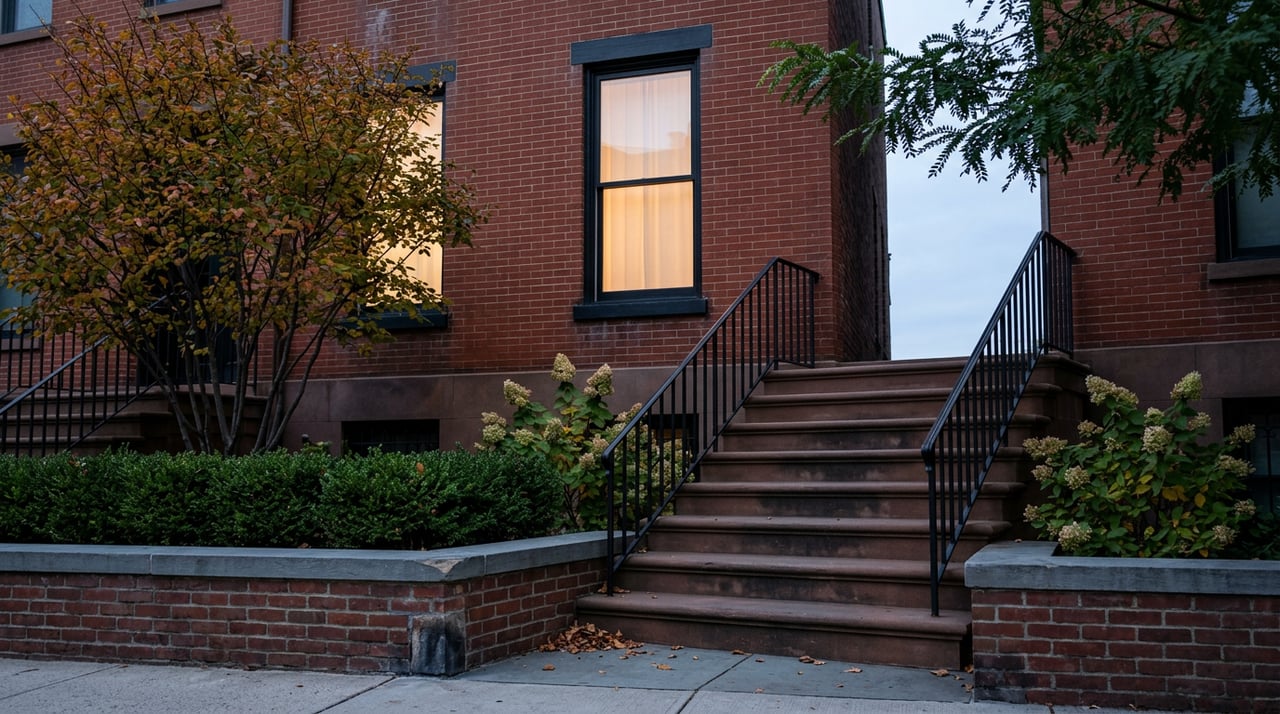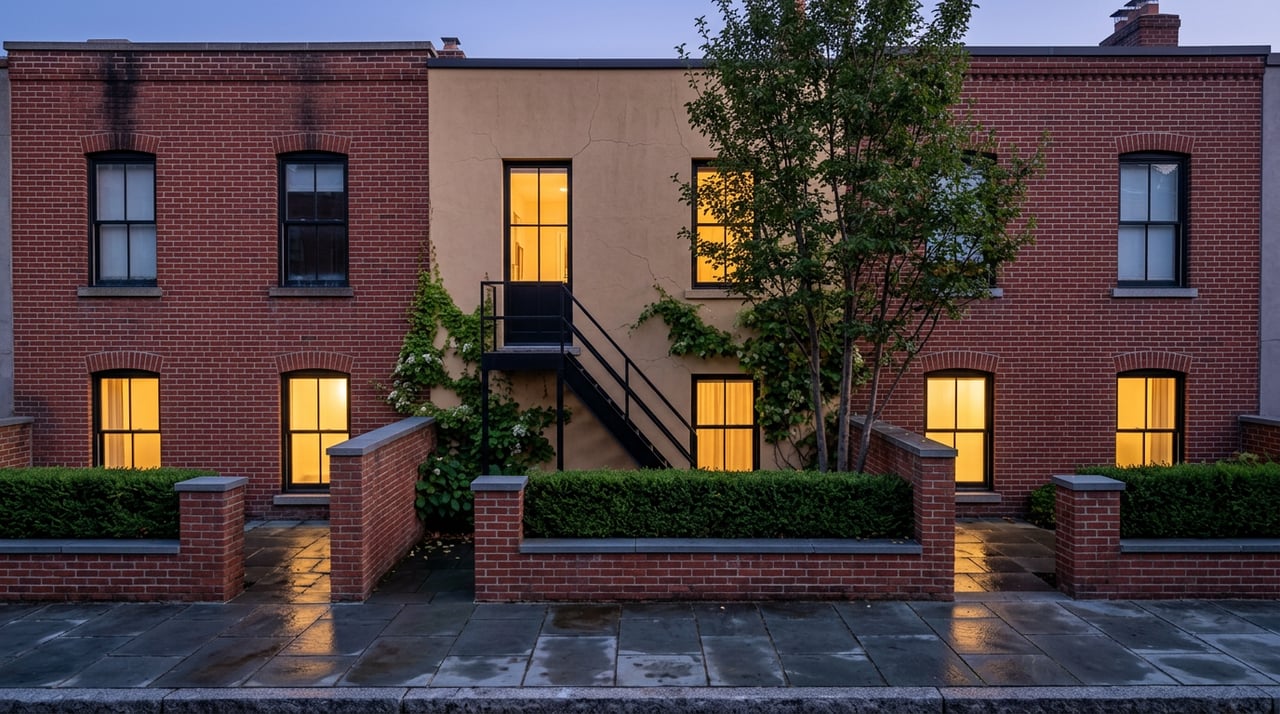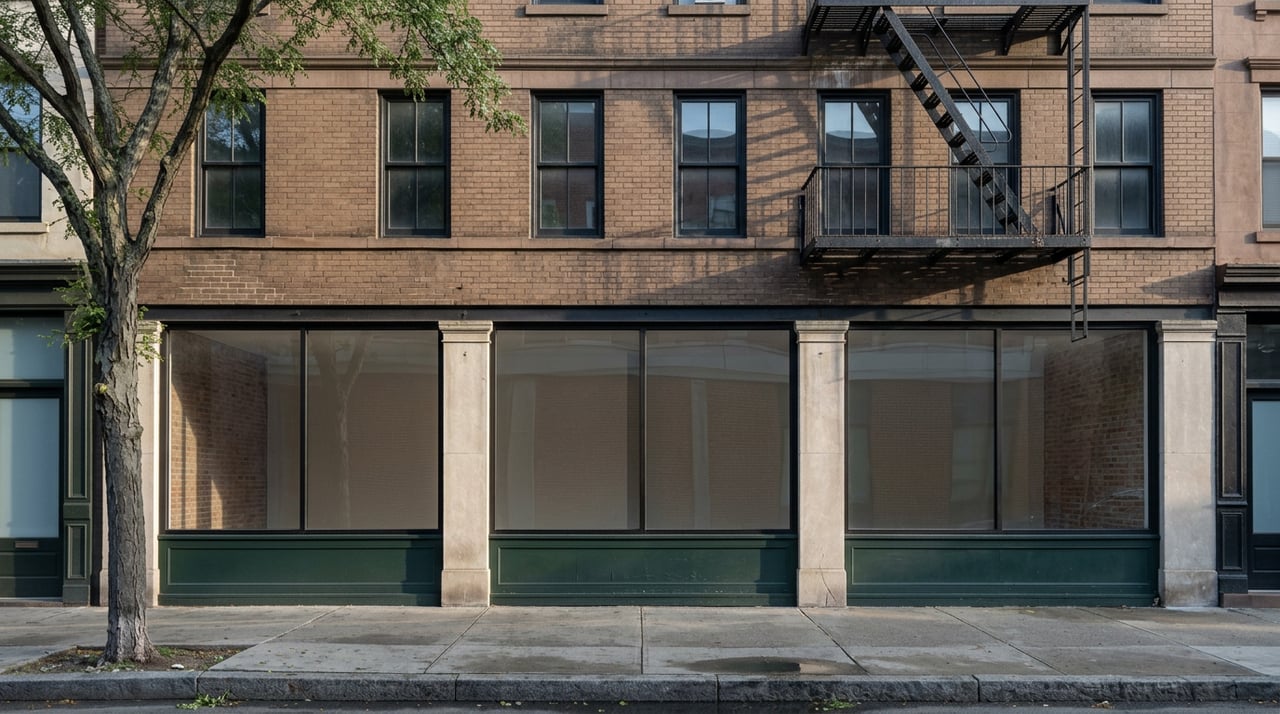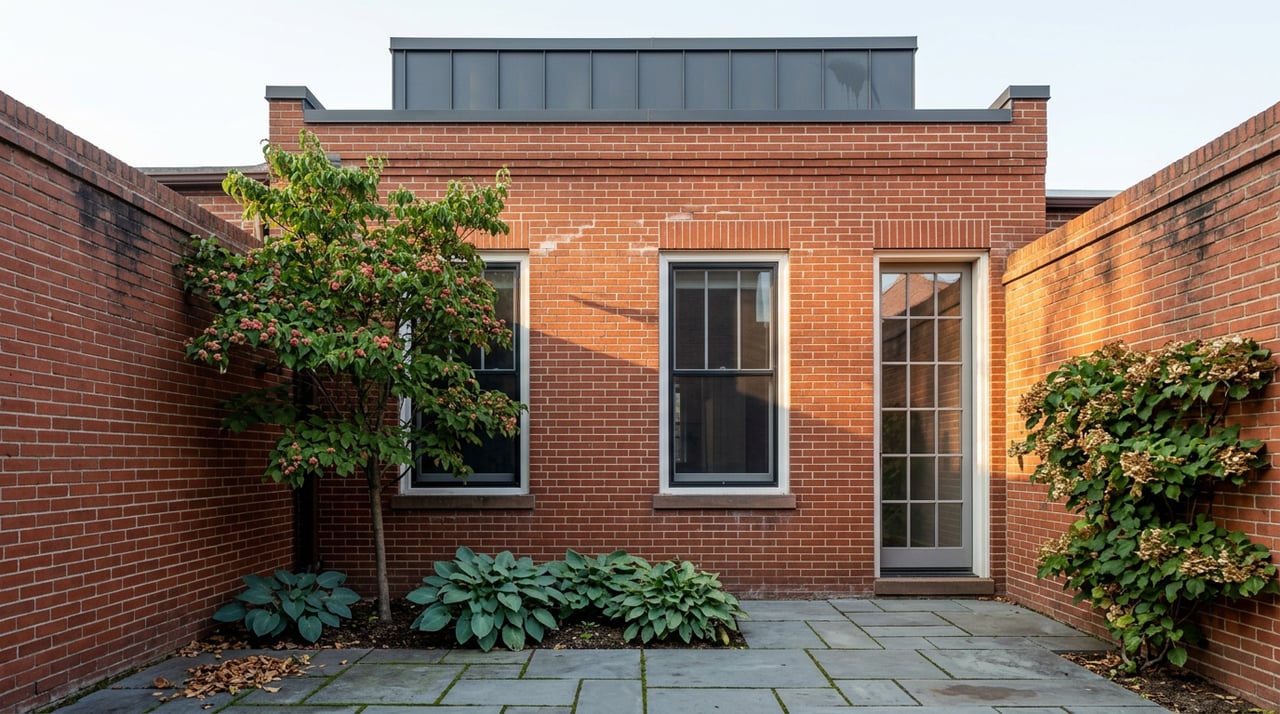
Two townhouses sit within a few doors of each other on Waverly Place between Grove Street and Sixth Avenue. One spent more than a year cycling through Landmarks Preservation Commission hearings, revisions, and a public rebuke over a rooftop addition and a set of mature trees that vanished before anyone got to weigh in. The other came out of a full gut renovation by DHD Architecture & Interior Design and went back on the market asking tens of millions more than what a comparable house nearby sold for before its own renovation.
Same block. Same historic district. Same Landmarks Preservation Commission. Wildly different outcomes. If you are shopping for a Village townhouse with renovation in mind, the gap between those two houses is the thing worth understanding before you write an offer, not after.
The File That Got Sent Back Twice
The house at 156 Waverly Place applied to construct a rooftop addition, reconstruct the rear facade, excavate the cellar and rear yard, replace windows, and legalize a stoop gate that had already gone in without a permit. Community Board 2 reviewed it in October and December of 2024. The Landmarks Preservation Commission held a hearing in January 2025 and did not approve it. Commissioners asked for the rear wall to be reexamined for salvageable material, for the existing top-floor windows to be kept, for the rooftop addition to be reduced, and for the stoop gate design to better match the historic ironwork. A revised presentation followed in March 2025.
Village Preservation's own record of the case includes a Community Board resolution recommending denial of the rooftop addition as "blatantly visible from a public thoroughfare," and flagging that mature trees in the rear yard had already been removed before the application was ever reviewed. That sequence, cutting first and asking later, is the kind of detail that turns a routine renovation into a year-plus negotiation with a public body that has the final word.
The House A Few Doors Down
Contrast that with 122 Waverly Place. That house went through a full gut renovation, also handled by DHD Architecture & Interior Design, and came back on the market with an eight-figure asking price reflecting a large profit over what similar unrenovated Village townhouses have traded for. A comparable a few blocks away in the West Village, the six-story Greek Revival at 125 West 11th Street, sold for $21.5 million in 2026 after its own extensive renovation and an extended marketing period, according to reporting on the sale.
The difference between these outcomes was not budget. Both projects had serious money behind them. The difference was whether the design respected the one test that actually governs everything visible from the street in this district: does it read from a public way, and if so, does it change the character the Commission is protecting.
Why This District Behaves This Way
Greenwich Village's historic district was designated in 1969 and covers more than 2,200 buildings across roughly 100 blocks, stretching from University Place to Washington Street and from 13th Street to West 4th Street and St. Luke's Place, according to Village Preservation, the nonprofit that has monitored every application in the district since 1980. Within that footprint, any exterior change visible from the street, a facade, a window, a stoop, a rooftop addition, needs Landmarks Preservation Commission approval before the Department of Buildings will issue a permit.
What most first-time Village buyers misunderstand is that this is not one process. It is two, and which one your project falls into determines whether your renovation takes two months or two years.
| Type of work | Review path | Typical timeline |
|---|---|---|
| In-kind repair, no visible change | Certificate of No Effect, staff level | Roughly 2 to 8 weeks |
| Window replacement, masonry repointing | Certificate of Appropriateness, often staff level | Roughly 3 to 6 months |
| Rooftop addition, visible rear yard work | Certificate of Appropriateness, public hearing | Roughly 6 to 18 months |
| Contested or revised proposals | Multiple hearings | 18 to 36 months |
There is also a faster track worth knowing about. The Commission's FasTrack option can clear both interior work and exterior alterations at non-visible facades and roofs in as little as 10 days. The lesson is not that landmark review is slow. It is that visibility from the street, not cost or ambition, is the variable that decides your timeline. A $40,000 rear-yard project that peeks over a roofline can take longer than a $2 million interior gut that stays hidden behind a landmarked front door.
The Trap You Inherit From Someone Else
There is a second friction that catches buyers off guard, and it has nothing to do with your own plans. At 34 West 12th Street, an Italianate townhouse built in 1860, the Commission reviewed a proposal in January 2025 to fix non-compliance issues tied to a Certificate of Appropriateness that had already been approved. An engineering report on the rear facade found bulging brick, cracking, and separation from the side walls with weakened mortar joints, the kind of condition that can surface only after a previous renovation went sideways.
If you buy a Village townhouse where a prior owner did unpermitted or non-compliant exterior work, that history does not disappear at closing. It becomes your file to resolve, on your timeline, at your cost. A pre-contract review of a property's LPC and Department of Buildings history is not a formality here. It is the difference between inheriting a clean slate and inheriting someone else's unfinished argument with the Commission.
What This Means Before You Sign
None of this means Village renovations are a bad bet. Rowhouses in this district still command premiums specifically because the character that makes the Commission strict is the same character buyers are paying for. But the buyers who capture that premium are the ones who price the approval process into their offer, not the ones who assume a rooftop deck or a rear extension is a given once the deal closes.
A few things worth confirming before you go to contract on a Village townhouse with renovation in mind:
- Whether your address falls within the historic district boundaries and whether any prior owner has open LPC violations or non-compliance findings on file
- Whether your renovation goals require visibility from the street, since that single fact determines whether you are looking at weeks or years
- Whether a pre-application meeting with LPC staff has already happened, and if not, building that meeting into your due diligence period before your financing contingency expires
- Whether the work touches a shared party wall, which can trigger a Party Wall Agreement under New York's Real Property Actions and Proceedings Law separate from anything LPC or the Department of Buildings requires
This is where a negotiation background earns its keep. Structuring an offer with a longer due diligence period, a renovation contingency, or a price that reflects known approval risk is a legal and negotiation exercise as much as a design one. It is also exactly the kind of detail that gets lost when a deal is treated as a straightforward purchase rather than the start of a multi-year approvals process.
A Few Questions We Hear Often
Does landmark review apply to a co-op renovation, or just townhouses? It applies to anything visible from the street, regardless of ownership structure. A co-op or condo unit behind a landmarked facade still needs LPC sign-off for exterior-facing changes like windows, even though interior work like a kitchen or bath generally does not.
If I only want to redo a kitchen, do I need to deal with the Commission at all? Usually not. Interior work that does not touch the exterior or require visible changes typically stays with the Department of Buildings alone. The moment a project touches a window, a vent that penetrates the facade, or anything visible from the sidewalk, LPC comes into the conversation.
What if the seller says the renovation was already approved? Ask to see the actual Certificate of No Effect or Certificate of Appropriateness on file, not a verbal assurance. The 34 West 12th Street case shows what happens when completed work does not match what was approved: the non-compliance becomes the new owner's problem to resolve.
Buying into Greenwich Village's historic district is still one of the more durable bets in Manhattan real estate. The Commission that makes renovations slower is the same one that keeps the block worth renovating on. Knowing which side of that equation your specific project falls on, before you sign, is the work.
If you are evaluating a Village townhouse or a landmarked building with a renovation in mind, Jed Lewin, Esq. can walk through the specific approval history on a property and help structure an offer around it. Request a confidential consultation to talk through the file before you go to contract.