If you are deciding between a townhouse and a full-service condo on the Upper West Side, you are really deciding how you want to live day to day. Some buyers want privacy, direct control, and a home that feels unmistakably house-like. Others want staff, convenience, and a building structure that can make ownership feel more predictable. The right answer depends on your priorities, and the Upper West Side makes that choice especially nuanced. Let’s dive in.
Why this choice feels different on the Upper West Side
The Upper West Side has long been defined by both rowhouse blocks and larger apartment-house corridors. Preservation sources note multiple historic districts and landmarks across the neighborhood, and rowhouses remain a recognizable part of the local streetscape.
But in market terms, these are not equal categories. Furman Center data for 2024 show just 9 one-family building sales on the Upper West Side, compared with 746 condo sales. That makes townhouses a much smaller and more specialized slice of the market.
For buyers, that matters in two ways. First, you are choosing a lifestyle. Second, you are choosing into a very different level of market liquidity, pricing visibility, and resale comparables.
What townhouse living really means
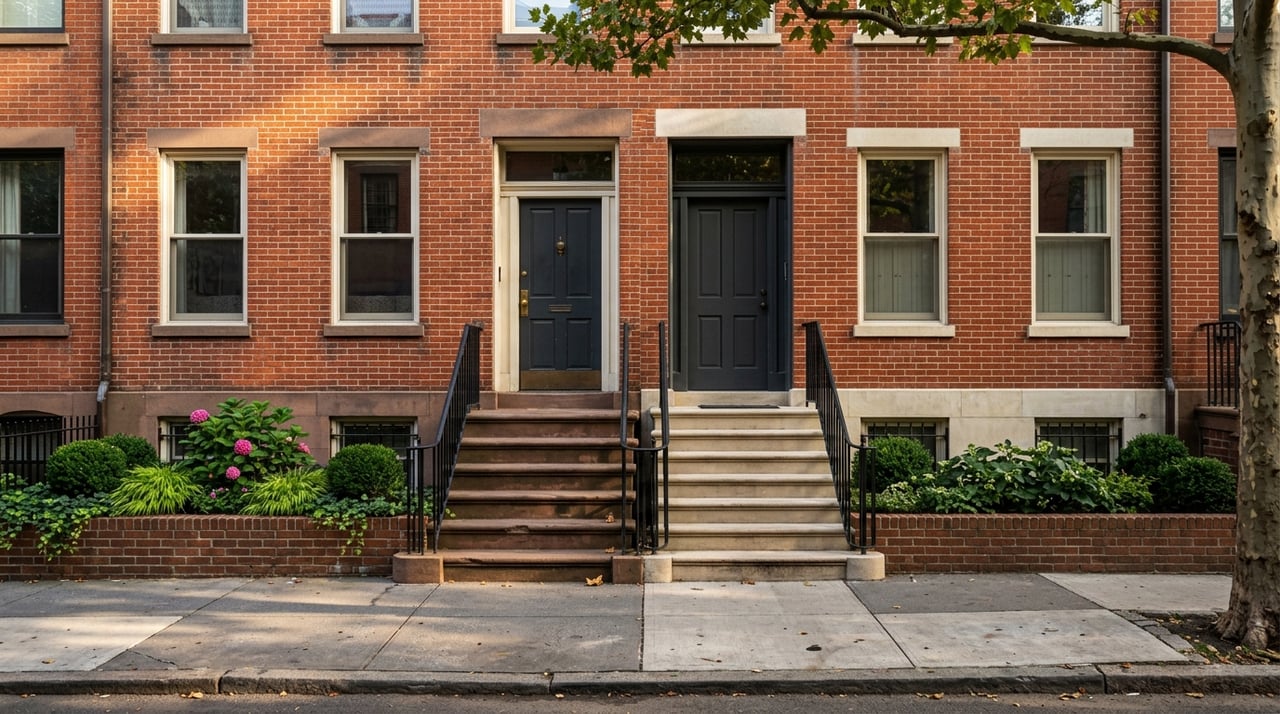
On the Upper West Side, townhouse living is the closest you can get to a traditional house experience in Manhattan. Urban Archive describes local rowhouses as originally single-family buildings, usually three to five stories, with stoops and individual entrances.
In practical terms, that usually means fewer shared spaces and more direct control over how the property functions. You are not relying on a doorman, concierge, or resident manager for daily logistics. You also tend to have more separation from neighbors and more privacy in your comings and goings.
That privacy can be a major draw, especially if you value a quieter ownership experience. For some buyers, the appeal is simple: no elevator waits, no shared lobby culture, and no need to coordinate with a large building ecosystem.
The tradeoff is responsibility
The same features that make a townhouse feel independent can also make it more demanding. The New York Attorney General notes that townhouse-type developments can include elements such as grounds, roadways, sidewalks, drainage systems, and retaining walls.
Even in a classic townhouse setting, ownership can come with concentrated repair risk. The Attorney General also flags expensive building issues like facade work, roof repairs, plumbing, electrical systems, boilers, and elevators in existing buildings. In a townhouse, those costs are not spread across dozens or hundreds of owners.
That is why townhouse carrying costs can feel less steady, even if the monthly budget looks simpler at first glance. One year may feel straightforward. The next may include major exterior or systems work that changes the cost picture quickly.
What full-service condo living offers
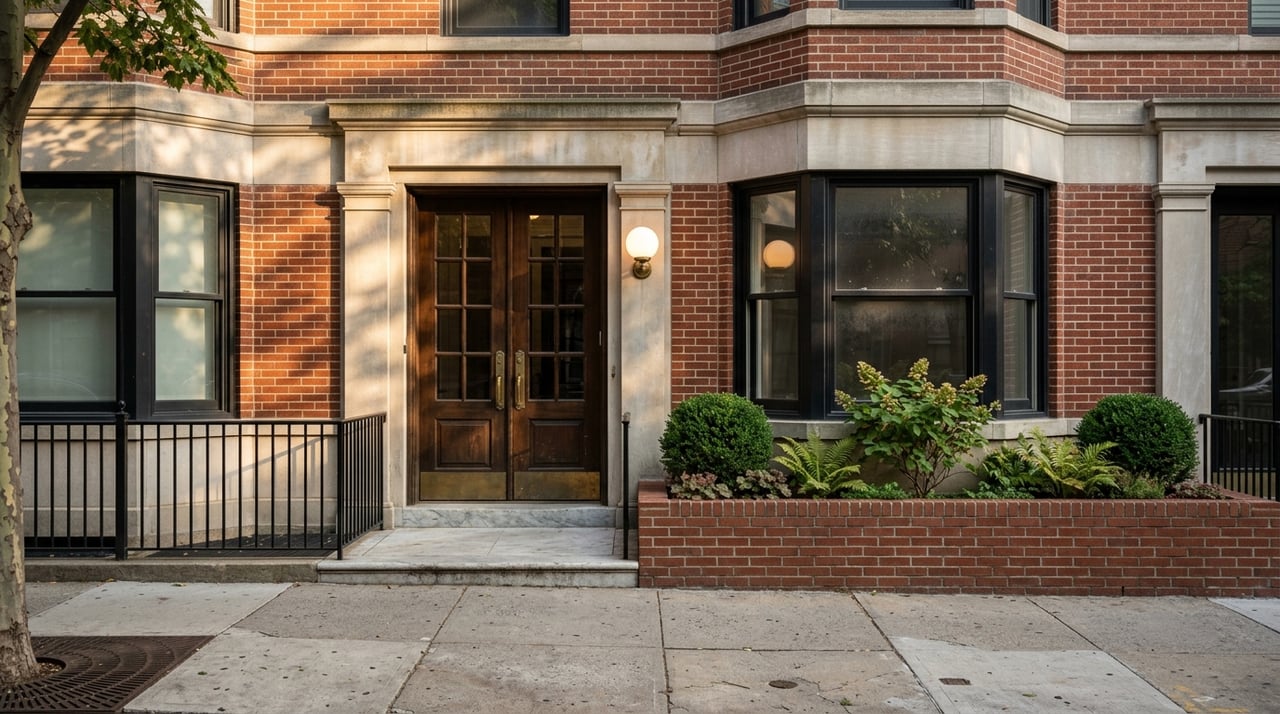
A full-service condo usually appeals to buyers who want convenience built into the ownership experience. In New York market shorthand, that often means a full-time doorman, concierge, maintenance staff, and often a superintendent and porter. Some buildings also include shared outdoor space, lounges, or pools.
The biggest advantage is operational ease. Packages are handled, staff are available, and the building infrastructure is managed through a broader system rather than by you alone. For busy professionals, part-time city residents, and buyers who value support, that can be a meaningful quality-of-life upgrade.
There is also a predictability factor. While full-service buildings certainly have costs, the day-to-day burden of managing the property does not sit on one owner’s shoulders.
The tradeoff is less privacy and more shared structure
The convenience of a full-service building comes with compromises. You are living in a shared environment with building staff, common spaces, and building-level policies. StreetEasy’s overview of full-service buildings also points to the obvious tradeoffs: less privacy and higher costs.
For some buyers, that structure feels helpful and efficient. For others, it feels like a layer between you and your home. If independence matters more to you than convenience, a townhouse may feel more natural.
Condo or co-op in the full-service category
Many buyers casually group full-service condos and co-ops together, but the ownership experience is not identical. On the Upper West Side, this distinction matters.
The New York Attorney General explains that co-op owners are shareholders in a corporation. Co-op boards are elected by shareholders and operate under bylaws, a proprietary lease, and house rules, including sublet provisions.
Condos also have boards and governing documents, but the Attorney General’s condo guidance says condo boards must follow the declaration, bylaws, and house rules, and that sublet provisions are generally not restrictive. In plain English, condos often allow more owner autonomy, while co-ops usually involve more board oversight.
Why this matters to your decision
If you are choosing between a townhouse and a full-service condo, you may actually be choosing between direct control and managed convenience with relatively flexible ownership. If you are comparing a townhouse to a full-service co-op, the contrast may be even sharper because co-op living is typically the most rule-driven format.
That does not make one better than another. It simply means you should match the ownership structure to your lifestyle, your plans for the apartment, and your comfort level with governance.
How carrying costs differ
Cost comparisons on the Upper West Side can get misleading fast if you are not looking at the right numbers. Townhouses, condos, and co-ops do not present monthly costs in the same way.
New York City property tax class is a major part of the equation. According to the Department of Finance, Class 1 includes one-, two-, and three-family homes and some small condo buildings, while Class 2 includes mostly residential properties with four or more units, including many co-op and condo buildings that are four stories or higher.
The Department of Finance says Class 1 property is assessed at 6% of market value, while Class 2 is assessed at 45%. Class 2 co-ops and condos are valued using income and expense data from similar rental buildings.
Why condo and co-op math can confuse buyers
For co-ops, the property tax bill goes to the building and is folded into maintenance or common charges. The Attorney General says each co-op owner pays maintenance based on the number of shares allocated to the apartment.
For condos, taxes are unit-specific. That means a true monthly cost comparison should include both condo common charges and condo property taxes. If you compare only common charges to co-op maintenance, you are not comparing the same thing.
This is one of the most common areas where buyers need careful analysis. A condo may look cheaper on one line item and more expensive once all-in monthly ownership costs are fully assembled.
The abatement process is also building-dependent
For qualifying primary residences, the co-op and condo property tax abatement is not handled directly by the owner. New York City says boards, managing agents, or other authorized representatives must apply on behalf of the development, and individual owners cannot apply directly.
That makes building administration part of the ownership equation. Especially in a higher-end purchase, competent building management is not just a convenience issue. It can affect how smoothly key administrative benefits are handled.
Resale and liquidity are not the same
This is one of the biggest practical differences on the Upper West Side. Condo inventory and townhouse inventory do not trade with the same frequency.
With 746 condo sales versus 9 one-family building sales in 2024, the condo market offers much deeper comparable-sales data. That can help buyers assess value more confidently and help sellers position a property within a broader pool of recent transactions.
Townhouses are different. Because there are so few transactions, pricing is often more bespoke. That can be a positive if you are buying or selling a highly distinctive property, but it can also make valuation less straightforward.
What that means if you may sell later
If future resale flexibility is high on your priority list, a full-service condo may offer a clearer path. More transaction volume generally means more data, more active buyer expectations, and a more standardized comparison set.
A townhouse can still be highly desirable, of course. But the resale conversation is often more individualized, and fewer comps can mean a longer pricing discussion on both the buy side and the sell side.
Due diligence matters more than amenities
It is easy to get distracted by a beautiful lobby, strong curb appeal, or a dramatic facade. On the Upper West Side, however, many buildings are older, and age can bring serious capital issues.
The Attorney General recommends reviewing the entire offering plan and assessing physical condition before signing for a co-op or condo purchase. Buyers are specifically directed to review board minutes, financial reports, and posted violations.
The same guidance flags facade defects, roof work, elevator repairs, plumbing replacement, and electrical upgrades as the kinds of items that can become expensive quickly. In other words, full-service convenience should be judged alongside building reserves, building condition, and future capital risk.
Townhouses need their own version of diligence
If the townhouse is part of a conversion or townhouse-style development, it is important to confirm what is private and what is common. The Attorney General notes that townhouse-type developments may include shared grounds or infrastructure elements such as sidewalks, drainage systems, roadways, and retaining walls.
That means some properties marketed as townhouses may carry more shared obligations than buyers initially expect. Clarity here can prevent unpleasant surprises after closing.
Which option tends to fit which buyer
A townhouse often fits buyers who prioritize privacy, direct control, and a more house-like daily rhythm. You may be more comfortable taking responsibility for maintenance in exchange for independence and space that feels distinctly your own.
A full-service condo often fits buyers who want staffing, convenience, and a broader resale market. If your schedule is demanding or you want a more managed ownership experience, this route can make a great deal of sense.
A full-service co-op may fit buyers who are comfortable with a more rules-based structure and more board oversight. For some people, that added structure feels completely normal. For others, it can feel restrictive.
How to make the decision clearly
If you are deciding between these paths, start with your daily life, not just the floor plan. Ask yourself what kind of ownership experience you want on an ordinary Tuesday, not just what sounds appealing in theory.
A useful framework is to compare the options across four questions:
- How much privacy do you want?
- How much building support do you want?
- How comfortable are you with repair responsibility?
- How important is resale liquidity and pricing transparency?
On the Upper West Side, that framework is especially useful because the housing stock is so varied. The right choice is usually the one that aligns your lifestyle with the practical realities of ownership.
If you want a calm, strategic read on whether a townhouse or full-service condo better fits your goals on the Upper West Side, Jed Lewin, Esq. offers thoughtful buyer representation, strong negotiation guidance, and highly personalized transaction management.
FAQs
What is the main difference between a townhouse and a full-service condo on the Upper West Side?
- A townhouse usually offers more privacy, direct control, and a house-like setup, while a full-service condo usually offers staffing, shared amenities, and a more managed ownership experience.
Are Upper West Side townhouses harder to price than condos?
- Often, yes. Furman Center data show far fewer one-family building sales than condo sales on the Upper West Side, which means townhouses typically have fewer direct comparables.
How should you compare monthly costs for an Upper West Side condo and co-op?
- For a fair comparison, add condo property taxes to condo common charges, then compare that total with co-op maintenance, since co-op property taxes are generally folded into maintenance.
Do Upper West Side full-service condos have fewer rules than co-ops?
- In general, condos tend to offer more owner autonomy, while co-ops are typically more rule-driven because they operate through a corporate ownership structure, bylaws, a proprietary lease, and house rules.
What should you review before buying a full-service condo or co-op on the Upper West Side?
- You should review the offering plan, board minutes, financial reports, posted violations, and any signs of major capital issues such as facade, roof, elevator, plumbing, or electrical work.
What should you confirm before buying an Upper West Side townhouse in a development?
- You should confirm which elements are private and which are shared, including any responsibility for grounds, sidewalks, drainage systems, retaining walls, or other common infrastructure.